Introduction
Brakes are one of the most critical safety components in any vehicle. Whether you’re cruising down the highway or navigating city traffic, your car’s ability to stop safely and reliably is essential. But how exactly does a car stop? And what kind of braking systems are used to make that happen?
Modern vehicles use a variety of braking technologies, each suited to different driving conditions, vehicle sizes, and performance needs. From traditional mechanical systems to advanced electronic braking, understanding the types of braking systems can help drivers make informed decisions about maintenance, upgrades, and safe driving practices.
In this guide, we’ll break down the most common types of braking systems used in cars—what they do, how they work, and where you’ll find them.
Why Braking Systems Matter
Before diving into the different types, it’s important to understand why braking systems are more than just a pedal.
- Safety: Proper braking prevents collisions and protects passengers, pedestrians, and other drivers.
- Control: Braking systems help maintain vehicle stability, especially on slopes or wet roads.
- Efficiency: Modern braking systems are designed to reduce wear and tear while maximizing fuel efficiency.
The right braking system, maintained properly, ensures your car performs reliably in both everyday and emergency situations.
1. Mechanical Braking System
How It Works:
The mechanical braking system is the most basic and was common in early vehicles. It uses physical linkages—like levers, springs, and cables—to transmit the braking force from the pedal to the wheels.
Common Use:
Today, mechanical systems are rarely used as the primary braking mechanism in cars but are still found in handbrakes or parking brakes.
Pros:
- Simple and inexpensive
- Easy to repair
- No fluid or hydraulic components
Cons:
- Less effective for high-speed or heavy vehicles
- Requires more driver effort
- Limited stopping power
2. Hydraulic Braking System
How It Works:
Hydraulic brakes use brake fluid to transfer force from the brake pedal to the brake pads or shoes. When you press the brake pedal, it pushes fluid through brake lines, activating pistons at each wheel that apply pressure to stop the vehicle.
Common Use:
This is the most widely used braking system in modern passenger cars and motorcycles.
Key Components:
- Master cylinder
- Brake lines and hoses
- Brake calipers and pistons
- Brake fluid (DOT-rated)
Pros:
- Provides strong, consistent braking force
- Requires less physical effort
- Self-lubricating and self-adjusting
Cons:
- Sensitive to air or moisture in the lines (can lead to brake failure)
- Requires regular fluid maintenance
3. Air Braking System
How It Works:
Used primarily in heavy commercial vehicles like trucks and buses, air brakes use compressed air instead of fluid. When the driver presses the brake pedal, air pressure is released into brake chambers, activating the brakes.
Common Use:
Found in large trucks, trailers, and buses due to their reliability and strength.
Key Components:
- Air compressor
- Air reservoirs
- Brake chambers
- Slack adjusters
Pros:
- Highly reliable for heavy loads
- Air is not susceptible to leakage like fluid
- Brake fade resistance on long descents
Cons:
- More complex to maintain
- Delay in response time if system isn’t well-calibrated
4. Disc Brake System
How It Works:
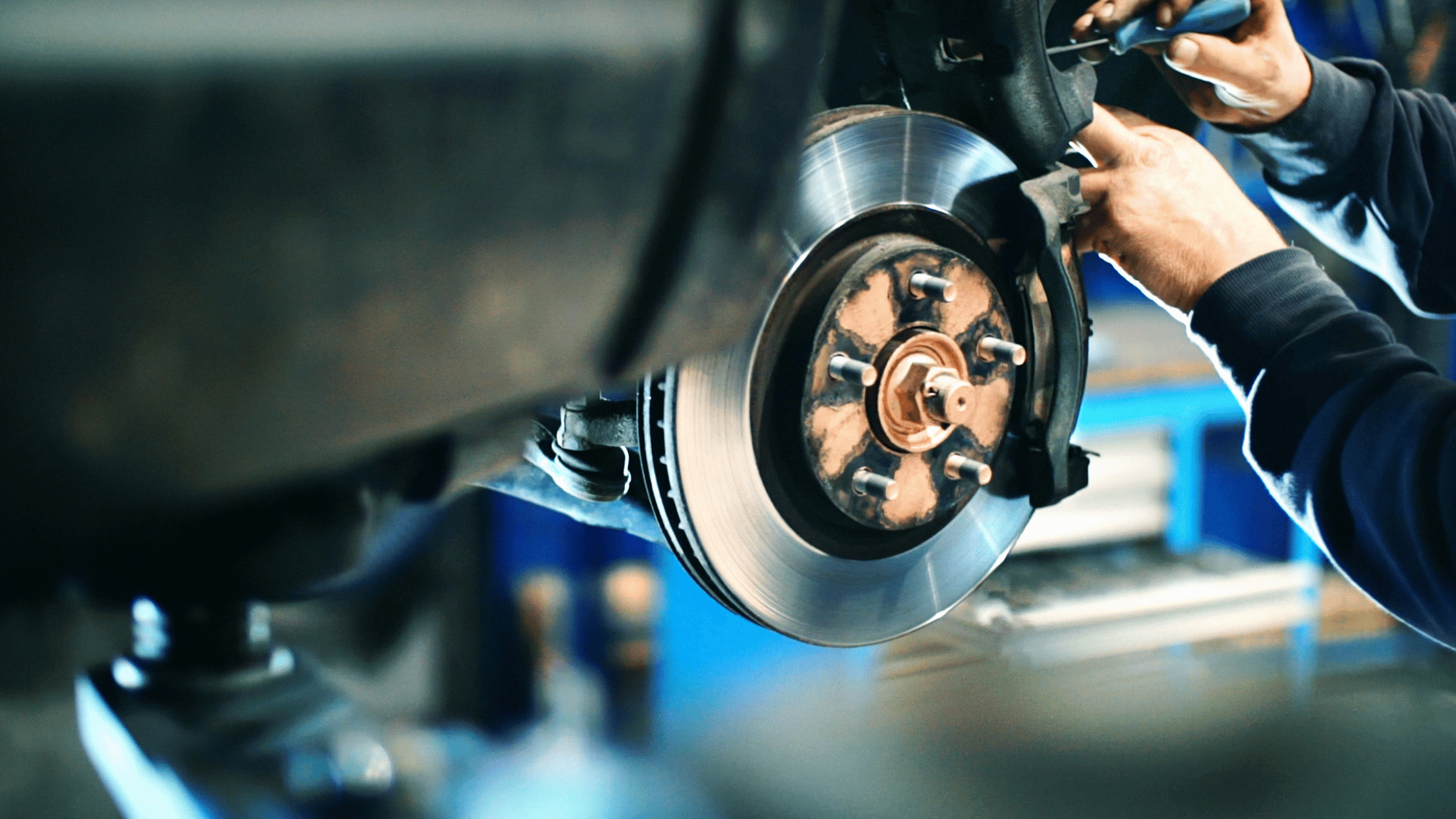
Disc brakes use a rotating disc (or rotor) attached to the wheel. When you brake, calipers press brake pads against the disc to create friction and stop the vehicle.
Common Use:
Standard in most modern cars, especially for front-wheel braking systems.
Pros:
- Superior heat dissipation
- Better performance in wet conditions
- Easy to inspect and maintain
Cons:
- Can be more expensive than drum brakes
- Pads wear faster under heavy use
5. Drum Brake System
How It Works:
Drum brakes consist of a drum attached to the wheel, with brake shoes inside. When you apply the brakes, the shoes press outward against the drum to create friction.
Common Use:
Still used in some rear wheels of budget cars or smaller vehicles.
Pros:
- Cost-effective to manufacture
- More braking surface area than discs
- Integrated parking brake in one unit
Cons:
- Less efficient cooling
- More prone to fading under continuous braking
6. Anti-lock Braking System (ABS)
How It Works:
ABS is an electronic safety system that prevents wheels from locking up during hard braking. It uses wheel speed sensors and control modules to rapidly pulse the brakes, maintaining traction and control.
Common Use:
Standard in nearly all new vehicles; mandated in many countries.
Pros:
- Prevents skidding
- Maintains steering control under emergency braking
- Especially helpful on slippery or wet roads
Cons:
- Slightly more expensive repairs
- May take time to activate in certain low-speed situations
7. Emergency Brake (Parking Brake)
How It Works:
Also known as the handbrake or e-brake, this system is used to keep the vehicle stationary when parked or in an emergency. It operates independently from the main hydraulic system—usually through a mechanical cable or electronic actuator.
Types:
- Manual lever (cable-operated)
- Foot pedal
- Electronic parking brake (push-button)
Pros:
- Adds safety layer
- Essential for parking on slopes
- Still works if main brakes fail
Cons:
- Not designed for high-speed stopping
- Cables can stretch or fail over time
8. Regenerative Braking System
How It Works:
Primarily found in hybrid and electric vehicles, regenerative braking converts the kinetic energy during braking into electrical energy, which is stored in the battery for later use.
Common Use:
Used in EVs (like Tesla, Nissan Leaf) and hybrids (like Toyota Prius).
Pros:
- Increases energy efficiency
- Reduces brake wear
- Extends battery life
Cons:
- Limited performance at low speeds
- Still requires a traditional braking system for emergency stops
Conclusion
Braking systems are far more than just a pedal and a response—they’re complex, vital, and evolving. Whether it’s a simple mechanical brake or an advanced anti-lock system working with regenerative technology, each system plays a critical role in keeping drivers safe on the road.
Understanding the different types of braking systems gives you the knowledge to:
- Maintain your car more effectively
- Make informed decisions when buying or upgrading a vehicle
- Appreciate the engineering behind everyday safety
So the next time you come to a stop at a traffic light, you’ll know exactly what’s working behind the scenes to keep you safe.